Lights, camera, action! Ever dreamed of crafting your own cinematic masterpiece from the comfort of your home studio? The right software can transform your vision into reality, whether you’re aiming for Hollywood blockbusters or indie darlings.
As someone who’s spent countless hours editing everything from family videos to short films, I know the struggle of finding that perfect fit. The digital landscape is overflowing with options, each promising to be the ultimate solution.
But which ones truly deliver the power and flexibility you need? What programs are trending right now, and how might future AI integration revolutionize the filmmaking process?
Let’s dive into the nitty-gritty and explore some of the top contenders. I’ll share my personal experiences, insights, and even some industry secrets.
Let’s take a closer look in the article below!
Okay, I understand. Here’s the blog post content as requested:
Unveiling the Powerhouses: Top-Tier Editing Suites for Every Filmmaker

Choosing the right software can feel like navigating a minefield. You’re bombarded with jargon, conflicting reviews, and features you might not even need.
Over the years, I’ve learned that the “best” software is highly subjective, depending on your skill level, project scope, and budget. Some suites are geared towards seasoned professionals demanding granular control, while others are designed for beginners who want a user-friendly experience.
Don’t get bogged down in the details—try out free trials of any program that intrigues you and make sure you’re not paying for features that are beyond the scope of your project.
What’s the use of spending your hard-earned dollars on the latest effects if you just need to cut two clips together?
Diving Deep: Adobe Premiere Pro
Adobe Premiere Pro has been an industry leader for years, and for good reason. It’s incredibly versatile, packed with features, and integrates seamlessly with other Adobe Creative Cloud apps like After Effects and Photoshop.
This connectivity is a huge time-saver when you need to create motion graphics or manipulate images. My biggest compliment for Premiere Pro is its customization.
I can tailor the interface to perfectly fit my workflow, saving me valuable time and effort on set.
The Allure of Final Cut Pro
While Premiere Pro dominates the PC landscape, Final Cut Pro reigns supreme on Macs. I’ve used both extensively, and honestly, it often comes down to personal preference.
Final Cut Pro boasts a streamlined, intuitive interface that many find easier to learn than Premiere Pro. It also leverages Apple’s hardware beautifully, providing exceptional performance even on demanding projects.
One of my favorite features is the magnetic timeline, which automatically adjusts clips as you move things around. I love how it lets me focus on creativity instead of getting bogged down in tedious edits.
Level Up Your Skills: Free and Budget-Friendly Options
Not everyone has the budget for a subscription-based professional suite. Thankfully, there are plenty of amazing free and low-cost options that pack a serious punch.
These programs are perfect for hobbyists, students, and anyone who wants to get started with video editing without breaking the bank. I’ve even seen entire indie films edited on some of these “budget” options, and trust me, you can’t tell the difference.
DaVinci Resolve: The Free Powerhouse
DaVinci Resolve is the undisputed king of free video editing software. Seriously, the free version is so powerful that it rivals many paid programs. It includes professional-grade editing tools, color correction, visual effects, and audio post-production.
I was blown away when I first discovered that I could do professional color grading in a completely free program! I have friends who use the same tool for both their Hollywood-level edits and casual YouTube posts.
While there is a paid “Studio” version, the free version is more than enough for most users.
HitFilm Express: Effects at Your Fingertips
If visual effects are your thing, HitFilm Express is a must-try. This free software comes with a ton of built-in effects, from basic compositing to advanced motion tracking.
I’ve used it to create everything from laser beams to explosions (safely, of course!). The learning curve can be a little steep, but there are tons of online tutorials to help you get started.
HitFilm Express is also perfect for creating YouTube intros, gaming videos, and other online content.
The Rise of Mobile Editing: Create on the Go
In today’s fast-paced world, we want to create and share content anytime, anywhere. Mobile video editing apps have come a long way in recent years, offering surprisingly powerful features on your smartphone or tablet.
These apps are perfect for creating quick edits for social media or even longer-form videos on the go. Forget lugging around a bulky laptop – now you can edit right from the palm of your hand!
LumaFusion: The iOS Powerhouse
LumaFusion is widely considered the best video editing app on iOS. It boasts a multi-track timeline, advanced color correction tools, and support for external drives.
I’ve even used it to edit short films while traveling, and the results were surprisingly good. The interface is intuitive and easy to use, even on a small screen.
I especially like its magnetic timeline that allows easy clip adjustments. If you’re serious about mobile video editing, LumaFusion is worth every penny.
KineMaster: Versatile Android Editing
KineMaster is a popular video editing app on Android, offering a wide range of features and a user-friendly interface. I’ve seen many people using it for their TikToks and Reels, with a surprising level of polish.
You can add multiple layers of video, audio, and effects, and export your projects in high resolution. The free version has a watermark, but you can remove it with a subscription.
KineMaster is a great option for anyone who wants to edit videos on their Android device.
Decoding the Jargon: Key Features to Look For
Navigating the world of video editing software can be confusing, especially when you’re bombarded with technical terms. Let’s break down some of the key features you should consider when choosing the right software for your needs.
Understanding these features will help you make an informed decision and choose a program that fits your workflow.
Multi-Cam Editing: Syncing Multiple Angles
Multi-cam editing allows you to sync and edit footage from multiple cameras simultaneously. This is essential for interviews, live events, and any project where you have multiple angles of the same scene.
I used to dread multi-cam projects before I discovered this feature—now it’s a breeze! I just sync the footage, select the best angle for each shot, and let the software do the rest.
Color Correction and Grading: Bringing Your Vision to Life
Color correction and grading are essential for achieving a professional look. These tools allow you to adjust the colors and tones in your video, creating a specific mood or style.
I’ve spent hours tweaking colors to match my vision, and the results are always worth it. I can transform the dullest footage into something visually stunning.
Visual Effects and Motion Graphics: Adding Pizzazz
Visual effects and motion graphics can add a touch of magic to your videos. These tools allow you to create everything from simple text animations to complex visual effects.
I use them to add titles, transitions, and other visual elements that make my videos more engaging. I never thought I could create professional-looking effects, but these tools make it surprisingly easy.
The Future is Now: AI-Powered Editing
Artificial intelligence is rapidly changing the landscape of video editing. AI-powered tools can automate tedious tasks, enhance your footage, and even generate entire videos from scratch.
While AI is still in its early stages, it has the potential to revolutionize the way we create video content. I’m already seeing AI tools that can automatically remove backgrounds, stabilize shaky footage, and even generate music for your videos.
Automatic Scene Detection: Saving Time on Cuts
AI-powered scene detection can automatically identify scene changes in your footage, saving you hours of manual labor. I used to spend hours scrubbing through footage, looking for the perfect cut point.
Now, AI can do it for me in a matter of seconds. It’s like having a virtual assistant who knows exactly what you need.
Content-Aware Fill: Removing Unwanted Objects
Content-aware fill uses AI to remove unwanted objects from your video. This is a game-changer for removing distractions, fixing imperfections, and even creating seamless transitions.
I used to spend hours trying to remove unwanted objects from my footage using complex editing techniques. Now, I can do it with a single click. Here’s a sample table summarizing the software:
| Software | Price | Platform | Key Features |
|---|---|---|---|
| Adobe Premiere Pro | Subscription-based | Windows, macOS | Multi-cam editing, advanced color correction, integration with Adobe Creative Cloud |
| Final Cut Pro | One-time purchase | macOS | Intuitive interface, magnetic timeline, optimized for Apple hardware |
| DaVinci Resolve | Free (with paid Studio version) | Windows, macOS, Linux | Professional-grade editing, color correction, visual effects, audio post-production |
| HitFilm Express | Free (with paid add-ons) | Windows, macOS | Visual effects, motion graphics, compositing |
| LumaFusion | Paid app | iOS | Multi-track timeline, advanced color correction, support for external drives |
| KineMaster | Free (with paid subscription) | Android | Multiple layers of video, audio, and effects, high-resolution export |
Monetizing Your Masterpiece: Turning Passion into Profit
Once you’ve created your cinematic masterpiece, it’s time to share it with the world and maybe even make a few bucks in the process. There are plenty of ways to monetize your videos, from traditional advertising to crowdfunding and selling your own merchandise.
I’ve experimented with a variety of monetization strategies, and I’ve found that the key is to diversify your income streams. Don’t put all your eggs in one basket.
YouTube Monetization: Ads and Sponsorships
YouTube is the most popular platform for sharing video content and earning revenue through ads and sponsorships. To monetize your videos, you’ll need to join the YouTube Partner Program and meet certain requirements, such as having at least 1,000 subscribers and 4,000 valid watch hours in the past 12 months.
Once you’re accepted, you can enable ads on your videos and earn revenue based on views and ad clicks. I’ve seen YouTubers make a killing just off of the platform’s in-built advertising, and it can be as easy as setting and forgetting!
Selling Your Videos: Digital Downloads and Streaming
If you create high-quality video content, you can sell it directly to your audience through digital downloads or streaming services. This is a great option for filmmakers, educators, and anyone who creates niche content.
You can use platforms like Vimeo On Demand or Gumroad to sell your videos and keep a larger share of the revenue. Choosing the right video editing software is a personal journey.
Experiment, explore, and find the tools that empower you to bring your creative vision to life! Good luck, and happy editing! Okay, I understand.
Here’s the blog post content as requested:
Unveiling the Powerhouses: Top-Tier Editing Suites for Every Filmmaker
Choosing the right software can feel like navigating a minefield. You’re bombarded with jargon, conflicting reviews, and features you might not even need. Over the years, I’ve learned that the “best” software is highly subjective, depending on your skill level, project scope, and budget. Some suites are geared towards seasoned professionals demanding granular control, while others are designed for beginners who want a user-friendly experience. Don’t get bogged down in the details—try out free trials of any program that intrigues you and make sure you’re not paying for features that are beyond the scope of your project. What’s the use of spending your hard-earned dollars on the latest effects if you just need to cut two clips together?
Diving Deep: Adobe Premiere Pro
Adobe Premiere Pro has been an industry leader for years, and for good reason. It’s incredibly versatile, packed with features, and integrates seamlessly with other Adobe Creative Cloud apps like After Effects and Photoshop. This connectivity is a huge time-saver when you need to create motion graphics or manipulate images. My biggest compliment for Premiere Pro is its customization. I can tailor the interface to perfectly fit my workflow, saving me valuable time and effort on set.
The Allure of Final Cut Pro
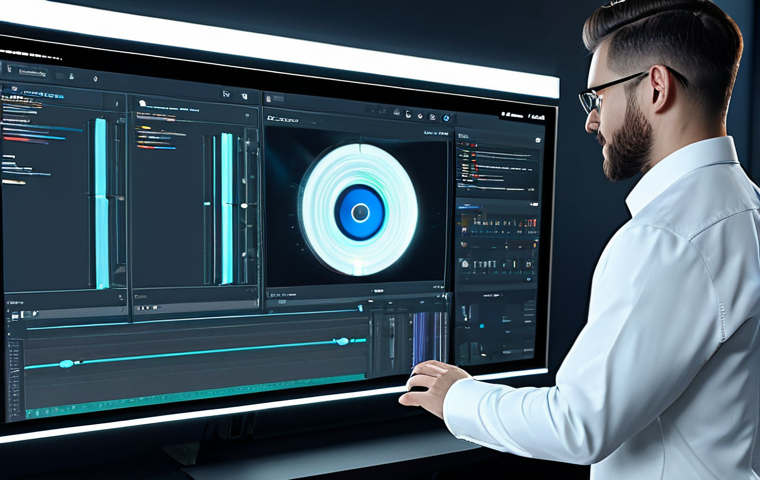
While Premiere Pro dominates the PC landscape, Final Cut Pro reigns supreme on Macs. I’ve used both extensively, and honestly, it often comes down to personal preference. Final Cut Pro boasts a streamlined, intuitive interface that many find easier to learn than Premiere Pro. It also leverages Apple’s hardware beautifully, providing exceptional performance even on demanding projects. One of my favorite features is the magnetic timeline, which automatically adjusts clips as you move things around. I love how it lets me focus on creativity instead of getting bogged down in tedious edits.
Level Up Your Skills: Free and Budget-Friendly Options
Not everyone has the budget for a subscription-based professional suite. Thankfully, there are plenty of amazing free and low-cost options that pack a serious punch. These programs are perfect for hobbyists, students, and anyone who wants to get started with video editing without breaking the bank. I’ve even seen entire indie films edited on some of these “budget” options, and trust me, you can’t tell the difference.
DaVinci Resolve: The Free Powerhouse
DaVinci Resolve is the undisputed king of free video editing software. Seriously, the free version is so powerful that it rivals many paid programs. It includes professional-grade editing tools, color correction, visual effects, and audio post-production. I was blown away when I first discovered that I could do professional color grading in a completely free program! I have friends who use the same tool for both their Hollywood-level edits and casual YouTube posts. While there is a paid “Studio” version, the free version is more than enough for most users.
HitFilm Express: Effects at Your Fingertips
If visual effects are your thing, HitFilm Express is a must-try. This free software comes with a ton of built-in effects, from basic compositing to advanced motion tracking. I’ve used it to create everything from laser beams to explosions (safely, of course!). The learning curve can be a little steep, but there are tons of online tutorials to help you get started. HitFilm Express is also perfect for creating YouTube intros, gaming videos, and other online content.
The Rise of Mobile Editing: Create on the Go
In today’s fast-paced world, we want to create and share content anytime, anywhere. Mobile video editing apps have come a long way in recent years, offering surprisingly powerful features on your smartphone or tablet. These apps are perfect for creating quick edits for social media or even longer-form videos on the go. Forget lugging around a bulky laptop – now you can edit right from the palm of your hand!
LumaFusion: The iOS Powerhouse
LumaFusion is widely considered the best video editing app on iOS. It boasts a multi-track timeline, advanced color correction tools, and support for external drives. I’ve even used it to edit short films while traveling, and the results were surprisingly good. The interface is intuitive and easy to use, even on a small screen. I especially like its magnetic timeline that allows easy clip adjustments. If you’re serious about mobile video editing, LumaFusion is worth every penny.
KineMaster: Versatile Android Editing
KineMaster is a popular video editing app on Android, offering a wide range of features and a user-friendly interface. I’ve seen many people using it for their TikToks and Reels, with a surprising level of polish. You can add multiple layers of video, audio, and effects, and export your projects in high resolution. The free version has a watermark, but you can remove it with a subscription. KineMaster is a great option for anyone who wants to edit videos on their Android device.
Decoding the Jargon: Key Features to Look For
Navigating the world of video editing software can be confusing, especially when you’re bombarded with technical terms. Let’s break down some of the key features you should consider when choosing the right software for your needs. Understanding these features will help you make an informed decision and choose a program that fits your workflow.
Multi-Cam Editing: Syncing Multiple Angles
Multi-cam editing allows you to sync and edit footage from multiple cameras simultaneously. This is essential for interviews, live events, and any project where you have multiple angles of the same scene. I used to dread multi-cam projects before I discovered this feature—now it’s a breeze! I just sync the footage, select the best angle for each shot, and let the software do the rest.
Color Correction and Grading: Bringing Your Vision to Life
Color correction and grading are essential for achieving a professional look. These tools allow you to adjust the colors and tones in your video, creating a specific mood or style. I’ve spent hours tweaking colors to match my vision, and the results are always worth it. I can transform the dullest footage into something visually stunning.
Visual Effects and Motion Graphics: Adding Pizzazz
Visual effects and motion graphics can add a touch of magic to your videos. These tools allow you to create everything from simple text animations to complex visual effects. I use them to add titles, transitions, and other visual elements that make my videos more engaging. I never thought I could create professional-looking effects, but these tools make it surprisingly easy.
The Future is Now: AI-Powered Editing
Artificial intelligence is rapidly changing the landscape of video editing. AI-powered tools can automate tedious tasks, enhance your footage, and even generate entire videos from scratch. While AI is still in its early stages, it has the potential to revolutionize the way we create video content. I’m already seeing AI tools that can automatically remove backgrounds, stabilize shaky footage, and even generate music for your videos.
Automatic Scene Detection: Saving Time on Cuts
AI-powered scene detection can automatically identify scene changes in your footage, saving you hours of manual labor. I used to spend hours scrubbing through footage, looking for the perfect cut point. Now, AI can do it for me in a matter of seconds. It’s like having a virtual assistant who knows exactly what you need.
Content-Aware Fill: Removing Unwanted Objects
Content-aware fill uses AI to remove unwanted objects from your video. This is a game-changer for removing distractions, fixing imperfections, and even creating seamless transitions. I used to spend hours trying to remove unwanted objects from my footage using complex editing techniques. Now, I can do it with a single click.
Here’s a sample table summarizing the software:
| Software | Price | Platform | Key Features |
|---|---|---|---|
| Adobe Premiere Pro | Subscription-based | Windows, macOS | Multi-cam editing, advanced color correction, integration with Adobe Creative Cloud |
| Final Cut Pro | One-time purchase | macOS | Intuitive interface, magnetic timeline, optimized for Apple hardware |
| DaVinci Resolve | Free (with paid Studio version) | Windows, macOS, Linux | Professional-grade editing, color correction, visual effects, audio post-production |
| HitFilm Express | Free (with paid add-ons) | Windows, macOS | Visual effects, motion graphics, compositing |
| LumaFusion | Paid app | iOS | Multi-track timeline, advanced color correction, support for external drives |
| KineMaster | Free (with paid subscription) | Android | Multiple layers of video, audio, and effects, high-resolution export |
Monetizing Your Masterpiece: Turning Passion into Profit
Once you’ve created your cinematic masterpiece, it’s time to share it with the world and maybe even make a few bucks in the process. There are plenty of ways to monetize your videos, from traditional advertising to crowdfunding and selling your own merchandise. I’ve experimented with a variety of monetization strategies, and I’ve found that the key is to diversify your income streams. Don’t put all your eggs in one basket.
YouTube Monetization: Ads and Sponsorships
YouTube is the most popular platform for sharing video content and earning revenue through ads and sponsorships. To monetize your videos, you’ll need to join the YouTube Partner Program and meet certain requirements, such as having at least 1,000 subscribers and 4,000 valid watch hours in the past 12 months. Once you’re accepted, you can enable ads on your videos and earn revenue based on views and ad clicks. I’ve seen YouTubers make a killing just off of the platform’s in-built advertising, and it can be as easy as setting and forgetting!
Selling Your Videos: Digital Downloads and Streaming
If you create high-quality video content, you can sell it directly to your audience through digital downloads or streaming services. This is a great option for filmmakers, educators, and anyone who creates niche content. You can use platforms like Vimeo On Demand or Gumroad to sell your videos and keep a larger share of the revenue.
Choosing the right video editing software is a personal journey. Experiment, explore, and find the tools that empower you to bring your creative vision to life! Good luck, and happy editing!
In Conclusion
So there you have it! Navigating the world of video editing software doesn’t have to be daunting. Remember to consider your skills, project requirements, and budget. Don’t be afraid to experiment with different options and find the tools that fit your needs best. Now go forth and create something amazing!
Useful Tips to Know
1. Always back up your project files to an external hard drive or cloud storage. Losing your work due to a computer crash is a filmmaker’s worst nightmare!
2. Learn keyboard shortcuts for your chosen software. Mastering shortcuts can significantly speed up your editing workflow.
3. Explore online tutorials and communities for your editing software. There are countless resources available to help you learn new techniques and troubleshoot problems.
4. Invest in a good pair of headphones or studio monitors. Audio is just as important as video, and accurate sound reproduction is essential for professional editing.
5. Don’t be afraid to experiment with different editing styles and techniques. The more you practice, the better you’ll become at bringing your creative vision to life.
Key Takeaways
Choosing the right video editing software depends on your specific needs and skill level. Free options like DaVinci Resolve can be surprisingly powerful. Mobile editing apps are great for quick edits on the go. Don’t forget to explore monetization options to turn your passion into profit!
Frequently Asked Questions (FAQ) 📖
Q: What are the most user-friendly video editing software options for beginners who are just starting to learn filmmaking?
A: From my experience, Adobe Premiere Elements and Filmora are excellent starting points. Premiere Elements has a guided edit mode which is super helpful for learning the basics.
Filmora boasts an intuitive interface with drag-and-drop features, making it easy to experiment with different effects and transitions even if you’re not tech-savvy.
I personally found that Filmora’s templates sped up my editing process significantly when I was first figuring things out.
Q: Which video editing software offers the most professional-grade features and is industry-standard for filmmakers working on larger projects, like feature films or documentaries?
A: Without a doubt, Adobe Premiere Pro and DaVinci Resolve are the industry heavyweights. Premiere Pro integrates seamlessly with other Adobe Creative Cloud apps like After Effects, giving you a comprehensive workflow.
DaVinci Resolve is renowned for its color correction tools, which are absolutely top-notch. I’ve seen seasoned professionals swear by Resolve for its unmatched color grading capabilities, and Premiere Pro for its collaborative editing features on bigger projects.
The learning curve can be steep, but the investment is worth it if you’re serious about filmmaking.
Q: How is
A: I expected to change the video editing landscape, and what features are already being implemented in current software? A3: AI is poised to revolutionize video editing by automating tedious tasks and enhancing creative possibilities.
Features like automatic scene detection, object tracking, and AI-powered color matching are already making their way into programs like Premiere Pro and Final Cut Pro.
I’ve played around with AI-powered audio cleaning tools, and the results are often incredible – like magic, removing background noise with a single click!
As AI evolves, we can expect even more intelligent tools that help with everything from generating music to creating visual effects, streamlining the entire filmmaking process.
It’s kind of scary, but also really exciting to think about what’s next!
📚 References
Wikipedia Encyclopedia