Stepping onto a film set, there’s an undeniable magic in the air, a palpable energy that draws you into the collaborative chaos of creation. For years, I truly believed it was all about raw talent and a good story, but what genuinely struck me as I navigated the industry was the sheer depth of specialized skills each individual brings to the table.
It’s not just about pointing a camera or writing a script anymore; the landscape is undergoing seismic shifts, driven by technological leaps. I’ve witnessed firsthand how virtual production environments, leveraging cutting-edge game engines like Unreal Engine, are radically reshaping roles, demanding a blend of technical prowess and artistic vision.
Furthermore, the burgeoning influence of AI in everything from pre-visualization to post-production is not just a trend, it’s a fundamental recalibration, requiring professionals to adapt rapidly, perhaps even specialize in ‘AI wrangling’ or prompt engineering for creative outputs.
The days of siloed expertise are fading; now, it’s about fluid collaboration, often across continents, necessitating strong communication skills and an embrace of remote-friendly workflows.
This incredible evolution means that understanding the precise skills needed for each role is more crucial than ever for anyone aspiring to break in or thrive.
We’re about to explore precisely what it takes.
Stepping onto a film set, there’s an undeniable magic in the air, a palpable energy that draws you into the collaborative chaos of creation. For years, I truly believed it was all about raw talent and a good story, but what genuinely struck me as I navigated the industry was the sheer depth of specialized skills each individual brings to the table.
It’s not just about pointing a camera or writing a script anymore; the landscape is undergoing seismic shifts, driven by technological leaps. I’ve witnessed firsthand how virtual production environments, leveraging cutting-edge game engines like Unreal Engine, are radically reshaping roles, demanding a blend of technical prowess and artistic vision.
Furthermore, the burgeoning influence of AI in everything from pre-visualization to post-production is not just a trend, it’s a fundamental recalibration, requiring professionals to adapt rapidly, perhaps even specialize in ‘AI wrangling’ or prompt engineering for creative outputs.
The days of siloed expertise are fading; now, it’s about fluid collaboration, often across continents, necessitating strong communication skills and an embrace of remote-friendly workflows.
This incredible evolution means that understanding the precise skills needed for each role is more crucial than ever for anyone aspiring to break in or thrive.
We’re about to explore precisely what it takes.
Navigating the Blended Reality Landscape

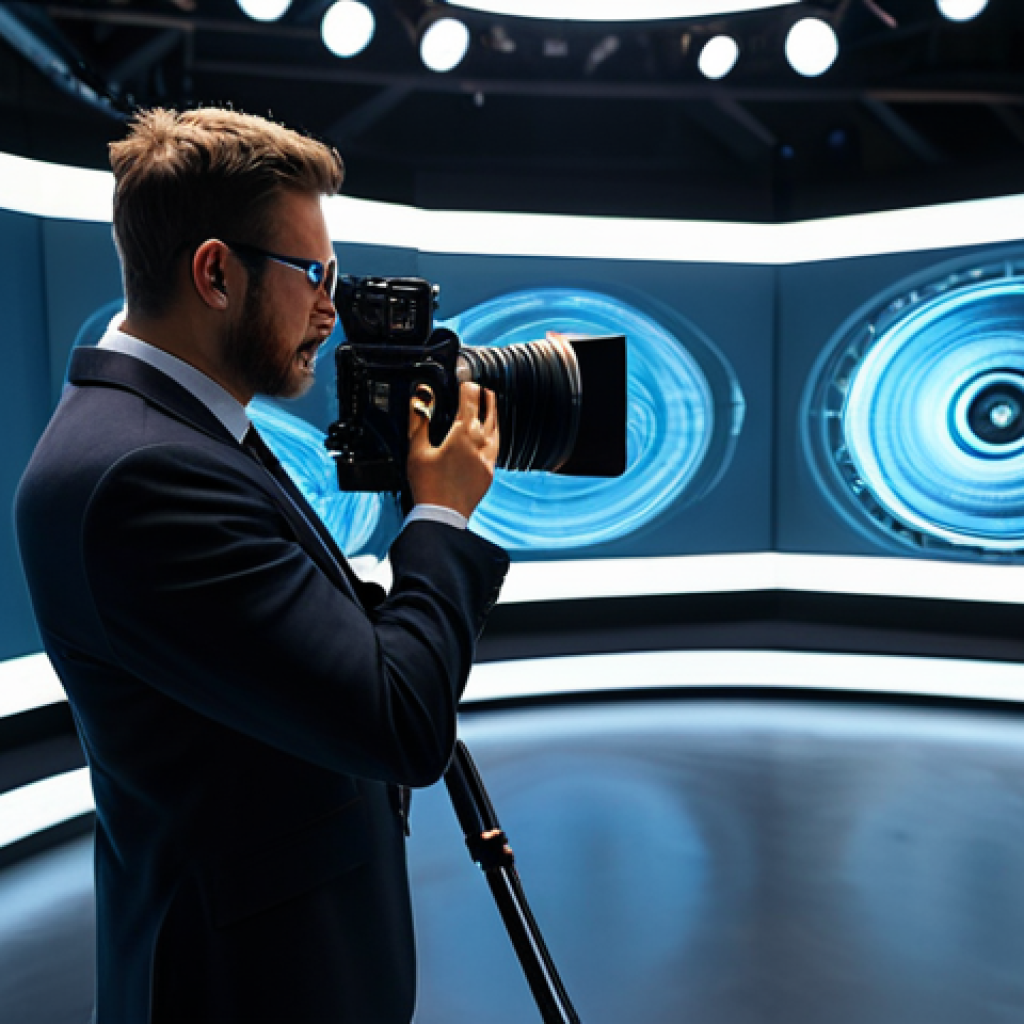
The shift towards virtual production isn’t just about fancy new toys; it’s a profound re-imagination of how we build worlds. I’ve walked onto sets where what once would have been a massive physical build is now a towering LED volume displaying hyper-realistic digital environments.
It’s truly mind-boggling, and it changes everything from how the director visualizes a scene to how the actors interact with their surroundings. This demands a whole new literacy in real-time engines like Unreal Engine or Unity, understanding how to manipulate assets, light virtual scenes, and even troubleshoot on the fly.
It’s no longer enough to just know your camera; you need to grasp the logic of a game engine, because that’s where your background is literally being rendered.
My early days of fumbling with digital assets quickly turned into a dedicated deep dive, realizing this wasn’t just a gimmick but the future. We’re talking about a merging of traditional cinematography with game development principles, where technical artists are as crucial as the grips.
This is where the magic happens, but it requires a very specific, adaptable skill set that keeps evolving.
The Real-Time Engine Savvy
It might sound intimidating, diving into game engines, but from what I’ve experienced, it’s becoming non-negotiable for many roles. Directors use them for pre-visualization, cinematographers for virtual scouting and real-time lighting, and production designers for building immersive sets that can be instantly modified.
You’re not just a passive user; you’re actively shaping the environment. For instance, I watched a DP adjust virtual lights and reflections on an LED wall in real-time, instantly seeing how it affected the scene, something that would have taken hours, if not days, in a traditional setup.
This demands an intuitive understanding of rendering pipelines, material properties, and basic scripting. It’s about being able to walk through a digital set as if it were physical, identifying potential issues or creative opportunities.
This blend of technical acumen and artistic sensibility is what truly sets someone apart in this brave new world of production.
Understanding Virtual Production Workflows
Beyond just knowing the software, grasping the entire virtual production workflow is paramount. This includes everything from the initial asset creation and optimization, through camera tracking and calibration, to the final on-set rendering.
It’s a complex dance where every department needs to understand how their piece fits into the larger puzzle. For someone in art department, it means understanding how their digital models will be ingested and rendered in real-time, and for a camera operator, it means comprehending how camera tracking data is used to seamlessly integrate physical elements with virtual backgrounds.
I’ve been in frustrating situations where a small misunderstanding in the pipeline led to significant delays, simply because one team didn’t fully grasp the needs of the other in this new, interconnected ecosystem.
It’s about proactive problem-solving and knowing the interdependencies.
The Evolving Language of Visual Storytelling
Cinematography and visual effects have always been at the heart of cinematic magic, but the tools and methodologies are undergoing a spectacular transformation.
Forget the painstaking hours of rendering; real-time visual effects are now a reality, fundamentally altering how DPs compose shots and how VFX artists contribute to the narrative.
I’ve seen cameras capturing performances on virtual sets where the final visual effects are already integrated into the monitor, giving instant feedback and allowing for immediate creative adjustments.
This isn’t just about faster workflows; it’s about a tighter feedback loop between all creative departments, leading to more cohesive and visionary results.
The ability to iterate on visual elements in real-time means that the “fix it in post” mentality is slowly fading, replaced by a “get it right on set” approach that integrates post-production principles into the principal photography phase.
It’s exciting, but it requires a very sharp eye and technical proficiency to truly leverage these new capabilities.
Real-time Compositing and In-Camera VFX
The advent of real-time compositing and in-camera VFX is perhaps one of the most thrilling shifts I’ve witnessed. Imagine shooting a scene where the actors are performing in front of an LED wall displaying a fantastical alien landscape, and the final look – complete with digital creatures and atmospheric effects – is being composited live, directly into the camera feed.
This changes how DPs light a scene, how actors react, and how directors guide the performance. It’s not just a post-production trick anymore; it’s an on-set reality.
I remember my first time experiencing this; it felt like stepping into the future. It demands that cinematographers and VFX supervisors collaborate more closely than ever before, almost blending their roles, requiring DPs to have a strong understanding of digital assets and VFX artists to grasp lensing and on-set lighting principles.
The immediate feedback loop enhances creative exploration and reduces costly reshoots.
AI-Enhanced Visual Development and Iteration
AI is quietly, but powerfully, revolutionizing visual development. From generating concept art variations in seconds to assisting with complex rotoscoping and tracking tasks, AI tools are becoming indispensable.
I’ve used AI-powered software that can analyze footage and suggest optimal color grades or even generate preliminary VFX elements, saving countless hours.
It’s like having an incredibly fast, tireless assistant. However, it’s crucial to remember that AI is a tool, not a replacement for human creativity. The true skill lies in prompt engineering – knowing precisely what to ask the AI and how to refine its output to match your artistic vision.
It takes a different kind of critical thinking to evaluate AI-generated content and integrate it seamlessly into the production pipeline. It’s about leveraging automation to free up creative bandwidth, allowing artists to focus on the nuanced storytelling rather than repetitive tasks.
The Art of Data-Driven Narrative Construction
Storytelling has always been the bedrock of film, but the methods of constructing and refining narratives are now being augmented by an unexpected ally: data.
This might sound counter-intuitive for an art form, but bear with me. From pre-production audience testing to understanding post-release engagement patterns, data analytics is providing unprecedented insights into what resonates with viewers.
I’ve seen production teams use sophisticated analytics to fine-tune character arcs, optimize pacing, and even inform marketing strategies, moving away from purely subjective guesswork.
It’s a fascinating blend of art and science, and it requires a new type of literacy for writers, directors, and producers – one that can interpret complex datasets and translate them into compelling story choices.
The goal isn’t to create formulaic content, but to empower creators with deeper understanding of their potential audience.
Audience Insights and Predictive Analytics
In the past, predicting audience reception was largely a gut feeling or based on limited focus groups. Today, predictive analytics, fueled by vast datasets of viewing habits and audience demographics, can offer incredibly granular insights.
I’ve seen how this data can inform decisions on everything from character archetypes that resonate globally to specific plot points that generate higher engagement.
It’s not about writing by numbers, but about understanding the landscape your story will enter. For screenwriters, this means perhaps understanding the nuances of different cultural preferences, or for producers, identifying underserved genres.
It’s about making informed bets, rather than blind leaps of faith. I personally find it incredibly empowering to have this level of insight, allowing for more targeted storytelling that still retains its artistic integrity.
AI in Script Development and Editing Workflows
AI’s role in narrative construction extends directly into the scriptwriting and editing phases. Tools are emerging that can analyze scripts for pacing issues, character consistency, or even suggest alternative dialogue.
In editing, AI can assist with first passes of scene assembly, identify emotionally impactful takes, or even help with automatic cutting of non-essential footage, significantly speeding up the initial stages.
I’ve experimented with AI tools that can quickly generate multiple variations of a scene based on a few prompts, offering a creative springboard. While the final emotional nuance and artistic choices always remain human, these tools act as powerful accelerators.
It feels less like replacing a human and more like augmenting their capabilities, allowing storytellers to explore more iterations and refine their vision with unprecedented speed and efficiency.
| Traditional Skill Focus | Emerging Skill Focus |
|---|---|
| On-set Physical Builds & Practical Effects | Virtual Production & Real-time Environment Design (e.g., Unreal Engine) |
| Linear Post-Production Workflow | In-Camera VFX & Real-time Compositing |
| Intuitive Story Development | Data-Driven Narrative Insights & Audience Analytics |
| Specialized Department Silos | Interdisciplinary Collaboration & Remote Workflow Management |
| Manual Labor & Repetitive Tasks | AI Integration & Prompt Engineering for Creative Outputs |
Orchestrating the Symphony: Sound and Immersive Experiences
Sound design and mixing have always been unsung heroes, often overlooked but absolutely critical to a film’s impact. However, the world of audio for cinema is now evolving beyond traditional stereo or even surround sound, venturing into truly immersive, spatial audio experiences.
With the rise of virtual reality, augmented reality, and even dome-projection theaters, the way sound is conceived and executed has to fundamentally shift.
I’ve had the goosebump-inducing experience of being inside an audio mix where sounds emanated from every direction, responding to my head movements, creating an unparalleled sense of presence.
This isn’t just about placing sounds; it’s about crafting an entire audioscape that draws the viewer deeper into the narrative, demanding specialized knowledge of object-based audio, ambisonics, and psychoacoustics.
The complexity is higher, but the creative possibilities are exponentially greater.
Mastering Spatial Audio and Immersive Soundscapes
Creating truly immersive soundscapes goes far beyond panning left or right. It involves understanding spatial audio formats like Dolby Atmos or DTS:X, where individual sound objects can be placed and moved within a three-dimensional space.
For sound designers and mixers, this means thinking not just about “what” a sound is, but “where” it is in relation to the audience and “how” it travels through the environment.
I’ve spent hours in mixing studios learning how to translate a traditional sound design approach into these new dimensions, realizing how a subtle change in object placement can dramatically alter the emotional impact of a scene.
This requires new tools, new listening environments, and a keen ear for how sound interacts with virtual and physical spaces. It’s an exciting frontier for sonic storytelling.
AI-Assisted Audio Post-Production
Just as AI is transforming visuals, it’s also making its mark on audio post-production. Tools are emerging that can automatically clean up dialogue, remove background noise, or even intelligently mix multiple tracks based on genre or emotional cues.
For example, I’ve used AI that can analyze a dialogue track and automatically remove reverb, saving countless hours of manual editing. While human ears and artistic judgment remain irreplaceable for the final polish and creative choices, these AI assistants handle the tedious, time-consuming tasks.
This allows sound engineers to focus on the higher-level creative aspects – the nuanced layering of sound effects, the emotional arc of the score, and the overall immersive quality of the sound design.
It truly streamlines the workflow, letting creativity flow more freely.
The Art of Seamless Storytelling Through Post-Production
Post-production has always been where the disparate pieces of a film finally coalesce into a unified vision. However, the digital revolution continues its relentless march, introducing new tools and demanding an even more refined skillset from editors, colorists, and VFX artists.
It’s no longer about simply cutting scenes together; it’s about a deep understanding of visual data, advanced color science, and the intricate dance between raw footage and digital enhancements.
I’ve personally experienced the frustration of struggling with unwieldy file formats or the elation of seeing a dull shot spring to life with a precise color grade.
The speed and complexity of projects have accelerated dramatically, requiring professionals to be not just artists, but also technical wizards capable of troubleshooting complex pipelines and managing massive datasets.
Advanced Color Science and Grading
Color grading is so much more than just making a film look pretty; it’s a powerful narrative tool that can evoke mood, guide the audience’s eye, and unify the visual language of a film.
With the proliferation of high dynamic range (HDR) and wide color gamut displays, the demands on colorists have skyrocketed. It’s about understanding deep color science, different color spaces, and how to precisely manipulate light and shadow to achieve a specific aesthetic and emotional impact across various viewing platforms.
I’ve spent countless hours in grading suites, witnessing the transformative power of a skilled colorist who can take a flat image and imbue it with profound emotional resonance, often working with complex LUTs (Look Up Tables) and intricate masking techniques.
It requires a blend of technical expertise and a finely tuned artistic eye to truly master.
Integrated Editing and VFX Workflows
The traditional hand-off between editing and visual effects is becoming increasingly blurred. Editors now need a stronger understanding of VFX pipelines, and VFX artists need to be more integrated into the editorial process, often working concurrently.
Tools that allow for seamless integration between editing software and VFX packages are becoming standard. This means a more collaborative and iterative process where changes can be made quickly, and the impact of VFX on the edit can be assessed in real-time.
My own experience has shown me that when editors and VFX artists communicate fluidly and understand each other’s needs from the outset, the final product is far more cohesive and polished.
It reduces costly rework and ensures that visual effects serve the story, rather than just being tacked on.
Building Bridges: The Imperative of Interdisciplinary Collaboration
The film industry has always been collaborative, but the accelerating pace of technological integration means that siloed expertise is rapidly becoming a relic of the past.
Today, a successful production hinges on every department not just doing their job, but genuinely understanding and appreciating the roles and challenges of others.
I’ve seen projects flounder not due to a lack of talent, but due to poor communication between a virtual production team and the costume department, or a misunderstanding between the sound design team and the visual effects artists.
This interconnectedness is not just a nice-to-have; it’s an absolute necessity. The ability to speak multiple technical “languages” and translate complex ideas across different disciplines is arguably as valuable as any individual specialized skill.
Effective Cross-Departmental Communication
In an industry where a single shot can involve real-time graphics, motion capture, traditional set pieces, and AI-driven post-processing, effective communication isn’t just about being polite; it’s about clarity, precision, and proactive problem-solving.
This means understanding the jargon of other departments, anticipating their needs, and being able to explain your own requirements in a way that resonates with them.
I’ve been in meetings where a quick, clear explanation from a technical artist about rendering limitations saved days of potential rework for the art department.
It’s about fostering an environment where everyone feels comfortable asking questions and sharing information, ensuring that the left hand always knows what the right hand is doing.
This soft skill is incredibly hard to master but infinitely rewarding.
Mastering Remote and Hybrid Workflows
The pandemic accelerated a trend that was already bubbling: remote and hybrid workflows are now a significant part of film production. From pre-production meetings held via video conferencing with participants across continents, to editors and VFX artists collaborating on shared cloud platforms, the ability to work effectively outside a physical office or set is crucial.
This demands proficiency with cloud collaboration tools, secure file transfer protocols, and a strong understanding of virtual private networks (VPNs).
I’ve personally managed projects where team members were spread across three time zones, and the success hinged entirely on robust communication strategies and reliable digital infrastructure.
It’s about maintaining efficiency and creative flow, even when you’re not physically in the same room.
Future-Proofing Your Creative Toolkit
The film industry has always been a space of relentless innovation, but the current pace feels unprecedented. What was cutting-edge yesterday can be commonplace tomorrow.
This makes continuous learning not just beneficial, but absolutely vital for anyone wanting to build a sustainable career. I’ve personally committed to dedicating a significant portion of my time to exploring new software, attending workshops on emerging technologies, and diving into research papers on AI or new production methodologies.
The most successful professionals I know aren’t just brilliant at their current craft; they’re also voracious learners, always anticipating the next wave of change.
It’s about cultivating a growth mindset and understanding that your education doesn’t end when you graduate, or even when you land your dream job.
Embracing Continuous Learning and Adaptability
The days of learning one skill set and coasting on it for decades are long gone. The film industry now demands a mindset of constant evolution. This means regularly updating your software knowledge, understanding new hardware capabilities, and even keeping an eye on advancements in unrelated fields that might eventually impact production.
I’ve seen seasoned professionals, initially resistant to new virtual production tools, embrace them with enthusiasm once they understood the creative liberation they offered.
It’s about being open to new ways of working, even if they initially feel uncomfortable or challenging. The ability to adapt quickly, learn on the fly, and pivot your skillset to meet new demands is truly the ultimate future-proofing strategy in this dynamic landscape.
Niche Specialization in Emerging Technologies
While adaptability is key, there’s also a growing demand for deep specialization in truly cutting-edge areas. Think about roles like “virtual production supervisor,” “AI prompt engineer for visual effects,” or “real-time lighting artist.” These are highly specialized niches that didn’t exist a decade ago but are now critical.
It’s about identifying a burgeoning technological area and becoming an undeniable expert in it. For me, this has meant spending countless hours experimenting with AI tools, pushing their creative boundaries, and understanding their limitations, which in turn has opened up new opportunities.
Developing a niche expertise in an emerging field can make you an indispensable asset, especially as the industry continues its rapid technological expansion.
Closing Thoughts
The landscape of film production is not just changing; it’s undergoing a thrilling metamorphosis, demanding a blend of traditional artistry and cutting-edge technological fluency.
From my own journey, what’s become crystal clear is that the future belongs to the curious, the adaptable, and those who aren’t afraid to dive into the unknown.
The most exciting innovations are happening at the intersections of disciplines, where game engines meet cinematography, and AI augments human creativity.
Embrace this evolution, and your creative toolkit will not only remain relevant but will unlock possibilities you never imagined.
Useful Information
1. Online Learning Platforms: Websites like Coursera, Udemy, and MasterClass offer incredible courses on Unreal Engine, AI for creatives, advanced cinematography, and more, often taught by industry professionals. Look for specialized certifications in virtual production.
2. Industry Conferences & Workshops: Events like NAB Show, SIGGRAPH, and various film festivals offer invaluable insights into new technologies and networking opportunities. Don’t forget local meetups and online webinars focused on emerging tech.
3. Build a Diverse Portfolio: Showcase not just your traditional skills but also your experiments with virtual production, AI tools, or immersive audio projects. Demonstrate your adaptability and willingness to integrate new workflows.
4. Network Across Disciplines: Don’t just stick to your own department. Connect with people in game development, data science, and AI research. Their insights will broaden your perspective and open doors to interdisciplinary projects.
5. Stay Curious and Experiment: The best way to learn is by doing. Download free software trials (e.g., Unreal Engine, Blender), join online communities, and actively experiment with new tools and workflows. Hands-on experience is paramount in this rapidly evolving field.
Key Takeaways
The film industry is experiencing a profound technological shift, led by virtual production and AI integration. Success now hinges on interdisciplinary collaboration, fluid communication, and a proactive embrace of new tools.
Continuous learning, adaptability, and the pursuit of niche specializations in emerging technologies are no longer optional but essential for future-proofing your career in this dynamic creative landscape.
Frequently Asked Questions (FAQ) 📖
Q: The text mentions ‘seismic shifts’ and ‘fundamental recalibration’ in the industry. From your direct experience, what’s been the most profound shift in how professionals need to approach their craft, and what kind of mindset is now essential for success?
A: Honestly, the biggest gut-punch shift I’ve witnessed isn’t just about learning new software, it’s about the very definition of a ‘craftsman’ on set. Before, you could be a virtuoso in your single lane – say, a genius DP who only worried about lighting and framing.
Now? That DP needs to understand how virtual environments impact their real-world lighting choices, how the Unreal Engine pipeline affects the post-production workflow, even how AI tools can generate preliminary shot lists.
The profound shift is from specialized silos to a multidisciplinary, adaptable mindset. You have to be curious, relentlessly so, and willing to shed what you thought you knew.
I remember this one veteran set designer, brilliant in practical builds, who initially scoffed at virtual sets. He almost got left behind. But then he pivoted, started learning 3D modeling, and suddenly his decades of spatial understanding merged with this new tech, making him indispensable.
It’s about being a lifelong student, embracing that feeling of being perpetually uncomfortable, because that’s where the growth happens now.
Q: You specifically highlighted ‘
A: I wrangling’ and ‘prompt engineering.’ Could you elaborate on what these roles entail in a practical sense, and where you’ve personally seen them create tangible value on a project?
A2: AI wrangling… it sounds a bit wild west, doesn’t it? But it’s dead serious.
In essence, it’s about expertly guiding AI tools to produce specific, usable creative outputs. It’s not just typing a prompt; it’s understanding the AI’s limitations, its strengths, and how to iterate through prompts to refine what it generates, whether it’s a concept art piece, a preliminary animatic, or even a script outline.
I saw this play out dramatically on a sci-fi short last year. We were struggling with creature design, going back and forth for weeks. Our lead concept artist, who admittedly was skeptical at first, started playing around with an AI image generator.
But she wasn’t just throwing random words in. She was ‘wrangling’ it – feeding it specific details about anatomy, texture, mood, then refining the prompts based on what the AI produced, almost having a conversation with it.
Within days, she had dozens of unique, mind-blowing concepts that we could then develop further. It accelerated our pre-production phase by weeks, no exaggeration.
And prompt engineering? That’s the systematic approach to it, learning the syntax, the ‘grammar’ of talking to these models. It’s becoming a crucial skill, almost a specialized language, for anyone wanting to leverage AI effectively in the creative pipeline.
It’s about getting the AI to speak your language, not the other way around.
Q: The text emphasizes that ‘the days of siloed expertise are fading,’ promoting ‘fluid collaboration.’ What does this kind of collaboration truly look like on a modern film set, especially with remote teams, and what are the biggest hurdles people face in achieving it?
A: Fluid collaboration, particularly with teams scattered across time zones, is less about rigid hand-offs and more about a constant, almost osmotic exchange of ideas.
Think less assembly line, more jazz ensemble. Instead of a linear ‘writer finishes, then director takes over, then DP shoots,’ you have writers and directors brainstorming with concept artists from day one, while previs artists are already building scenes that inform the virtual production team in another country.
It’s a cyclical, iterative dance. The shift to remote-friendly workflows means platforms like Unreal Engine’s nDisplay or shared cloud servers aren’t just tools, they’re virtual meeting rooms where anyone can chime in, make real-time adjustments, and see the impact instantly.
I remember a project where our editor in LA was giving live feedback on a rough cut to the director shooting on location in London, with the VFX supervisor in Vancouver pulling up references on a shared screen.
It was messy, glorious, and incredibly efficient. The biggest hurdle, though? Ego, hands down.
And a fear of letting go of control. Some folks are just wired for that ‘my turf, my rules’ mentality. Also, communication fatigue is real.
It’s hard to stay connected across so many channels and time differences without burning out. It requires a lot of empathy and a conscious effort to build trust, even when you’re just a face on a screen.
But when it clicks, that’s where the real magic happens, where the sum is truly greater than its parts.
📚 References
Wikipedia Encyclopedia
구글 검색 결과
구글 검색 결과
구글 검색 결과
구글 검색 결과
구글 검색 결과